Understanding Media Bias
· 1 material
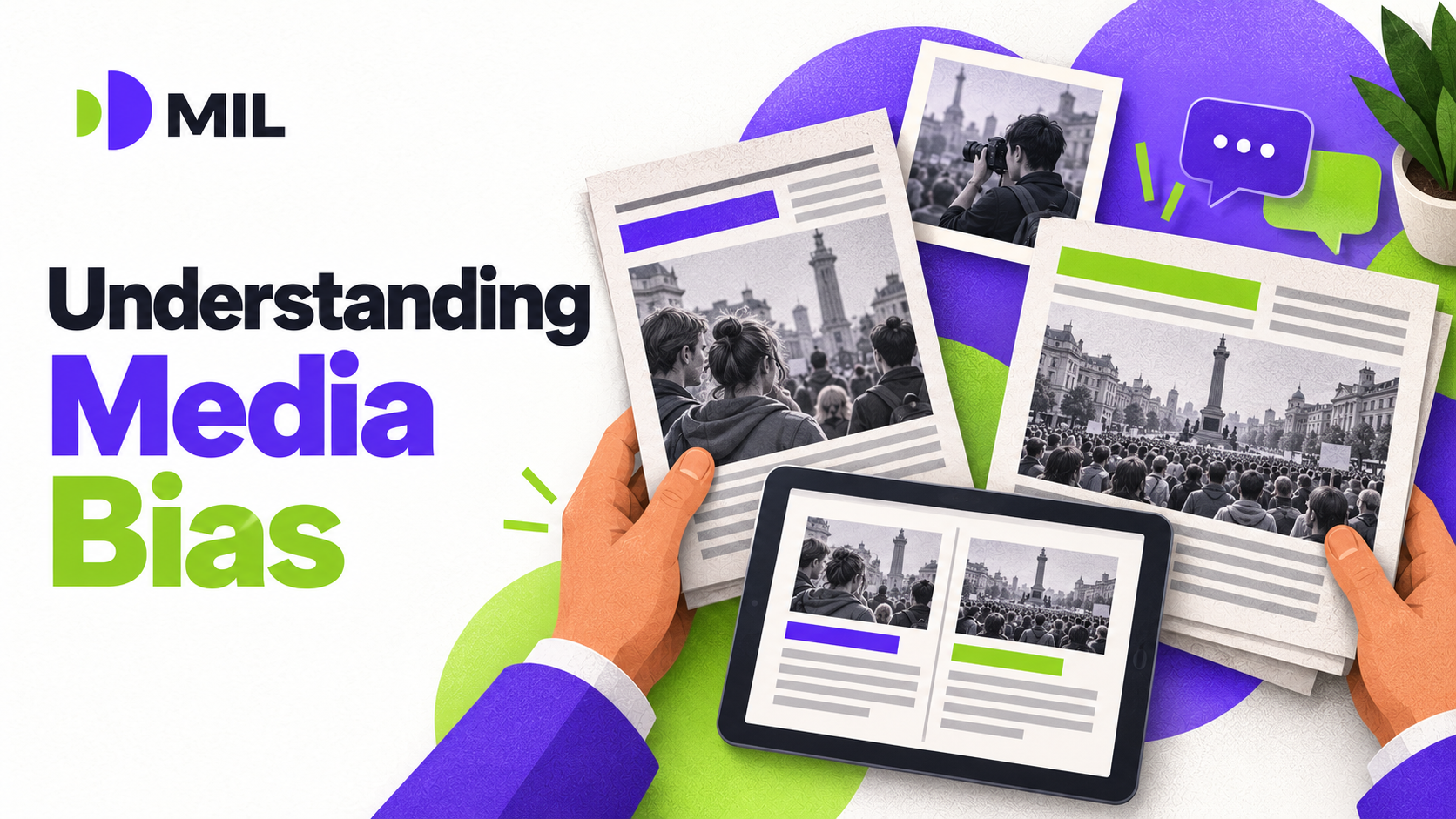
Media bias refers to patterns in how information is selected, framed, or presented that favor particular perspectives. It can influence which stories receive attention, whose voices are included, and how audiences interpret events. Recognizing bias helps us evaluate coverage critically and develop a more informed understanding of the world.
1. How Bias Appears in Media
Bias can appear through several editorial choices:
Story selection: Giving attention to certain topics while overlooking others.
Language: Using emotionally charged words that encourage approval or disapproval.
Source selection: Featuring voices that support one perspective while excluding relevant alternatives.
Visual framing: Choosing images, camera angles, or captions that shape impressions.
Missing context: Leaving out background information necessary to understand an event.
Two reports can describe the same event using accurate facts while creating different impressions through emphasis and presentation.
2. Questions to Ask While Reading
What does the headline emphasize?
Consider whether it fairly represents the article and its evidence.Whose voices are included or missing?
Look for relevant expertise and perspectives from people directly affected.Which words shape your reaction?
Notice labels, assumptions, and language that suggest judgment.What additional context would help?
Check whether important background, comparisons, or limitations are provided.
Recognizing bias does not automatically mean a report is false. Accuracy and framing need to be examined separately.
3. Building a Broader Perspective
To understand a topic more fully:
Compare independent sources with different editorial perspectives.
Distinguish reporting from opinion, commentary, and sponsored content.
Follow the evidence, rather than assuming every viewpoint is equally supported.
Question your own preferences, especially when a story confirms what you already believe.
Reading critically means staying curious and open to evidence. By examining both the information presented and the choices behind its presentation, we can form more thoughtful judgments.
Materials
- 1791187038502_AI-generatedVersusHuman-generatedContentinAdvertising.pdfPDF · 377 kBOpen