Introduction to Media and Information Literacy
· 2 materials
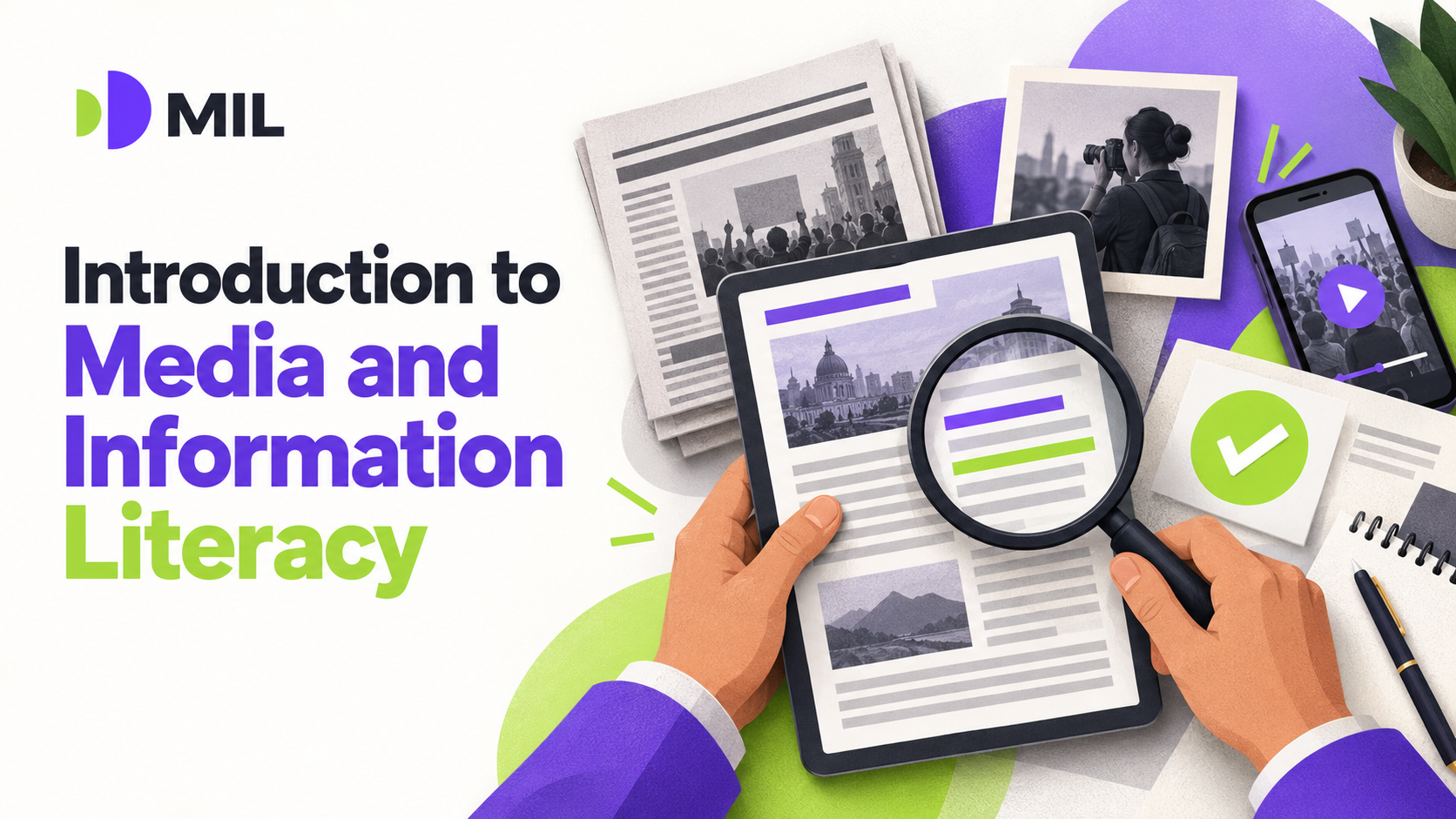
Media and Information Literacy (MIL) is the ability to access, understand, critically evaluate, create, and share information responsibly across different media platforms. These include television, radio, newspapers, websites, and social media. In a world where information spreads quickly, MIL helps us understand the messages we encounter, assess their credibility, and make informed decisions.
1. Understanding Media and Information Literacy
MIL brings together two closely connected areas:
Media literacy: Understanding how media messages are created, how they influence audiences, and how different perspectives are represented.
Information literacy: Knowing how to find relevant information, evaluate its reliability, and use it effectively and ethically.
Together, these skills encourage us to become active, thoughtful participants in the information environment.
2. Why Does MIL Matter?
Every day, we encounter news stories, advertisements, videos, opinions, and online discussions. However, not everything we see or read is accurate, complete, or trustworthy.
Media and Information Literacy helps us:
Make informed decisions based on credible evidence.
Recognize misinformation and avoid sharing misleading content.
Identify bias and understand how messages can shape our views.
Protect our privacy and manage personal information responsibly.
Respect different perspectives and participate in constructive discussions.
Create and share content ethically, with attention to accuracy and fairness.
Being informed involves more than having access to information; it requires the ability to question and evaluate it.
3. Questions to Ask Before Trusting Content
Before accepting or sharing a message, take a moment to ask:
Who created it?
Identify the author, organization, or account behind the content.What is its purpose?
Consider whether it aims to inform, entertain, persuade, advertise, or mislead.What evidence supports it?
Look for verifiable facts, original documents, and clearly identified sources.When was it published?
Check whether it is current or whether older content is being presented as new.What context or perspectives are missing?
Consider whether important details have been excluded or only one viewpoint is represented.Can other reliable sources confirm it?
Compare independent sources rather than relying on repeated copies of the same claim.
4. Recognizing Misleading Information
Misleading information can take several forms:
Misinformation: False or inaccurate information shared without the intention to deceive.
Disinformation: False or misleading information deliberately created or shared to deceive.
Misleading context: Genuine content presented with an incorrect explanation, date, or location.
Manipulated content: Images, audio, or videos altered in ways that change their meaning.
An authentic photograph can still mislead if its caption describes the wrong event.
5. Practicing Responsible Information Sharing
Before publishing, reposting, or forwarding content:
Pause before reacting to an emotional or shocking headline.
Read beyond the headline to understand the full message.
Check the original source, publication date, and supporting evidence.
Verify images and videos, including their origin and context.
Respect privacy and copyright when using other people’s information or work.
Correct mistakes openly if you discover that something you shared was inaccurate.
When a claim remains unverified, avoid presenting it as an established fact.
6. Becoming a Responsible Media Participant
MIL also helps us understand how advertising, algorithms, and platform design influence what we see online. The content appearing in our feeds may reflect our previous activity and commercial priorities, so it is valuable to seek different credible perspectives.
By practicing critical thinking, careful verification, and ethical communication, we can engage with media more confidently and contribute to an informed, respectful, and inclusive community.