“If I were in their place”: the words that reach a human heart
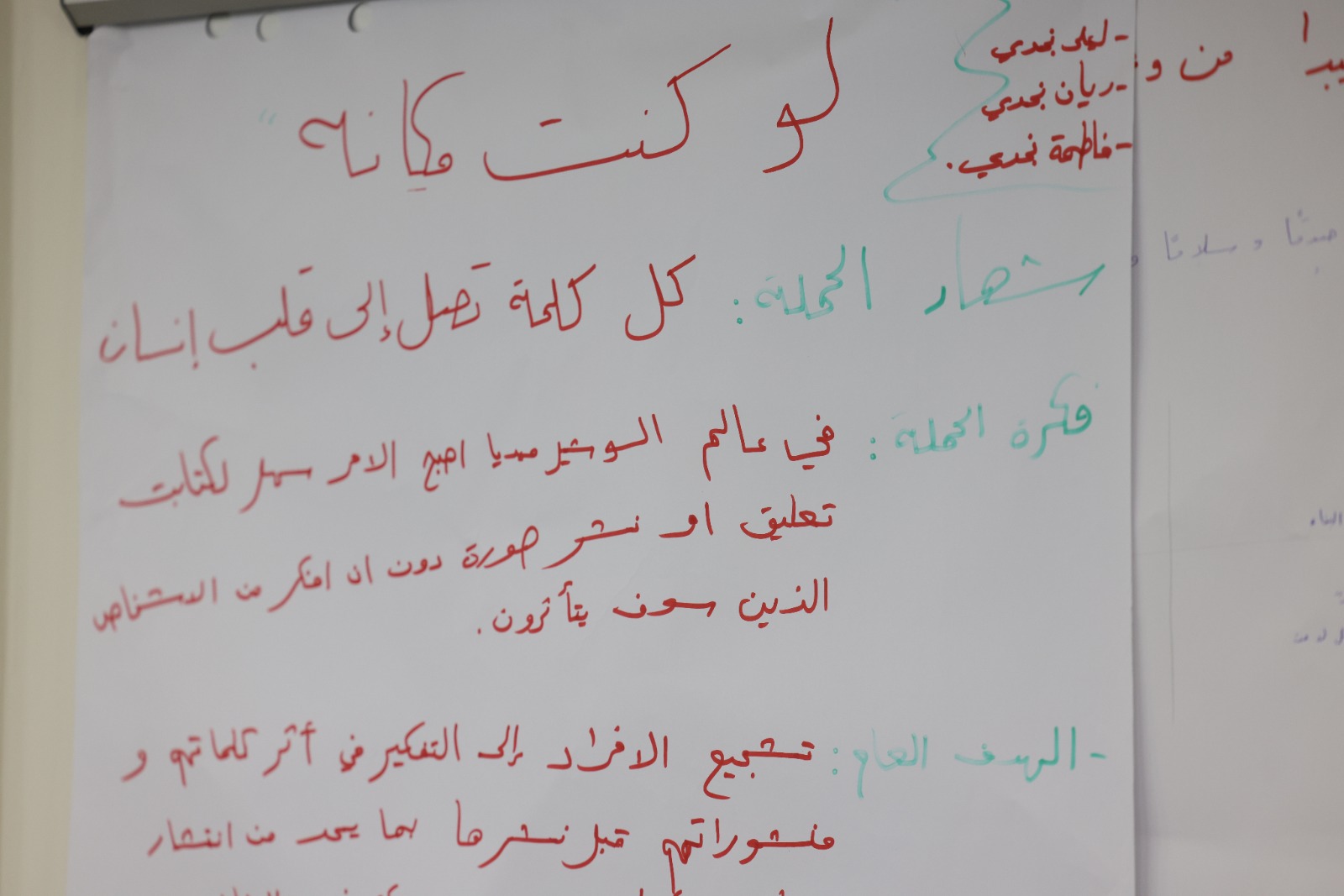
One whiteboard from our hate speech session stayed with me. At the top, in red marker, someone had written "لو كنت مكانه", "if I were in their place". Underneath: "every word reaches a human heart".
We had spent the morning reading comments from Lebanese pages, under posts about refugees, about people from other regions, about women who appeared in the news. Many of them weren't threats. They were jokes, nicknames, "just saying". That is exactly how hate speech becomes normal.
What we practised
- Pause before reacting. Anger is what the post was designed to produce.
- Separate the person from the group. One person's action is never "what they all are".
- Don't amplify. Quoting a hateful post to criticise it still spreads it. Report it instead.
- Support the target. A private message to the person attacked often matters more than a public argument.
- Correct with facts, calmly. You're writing for the silent readers, not the angry commenter.
Before you type, read it as if you were the person it's about.
It sounds simple. It isn't, especially when the topic is personal. But putting ourselves in someone else's place changed the tone of our own group chats more than any rule could.
Source: un.org/en/hate-speech/understanding-hate-speech/what-is-hate-speech
Comments1
Log in to join the discussion.
Log in